Design systems & development
2024
LeressaBritto.com — A portfolio to remember
A designer's portfolio built as a design system with three project templates, so new work publishes in minutes without breaking the editorial grid.
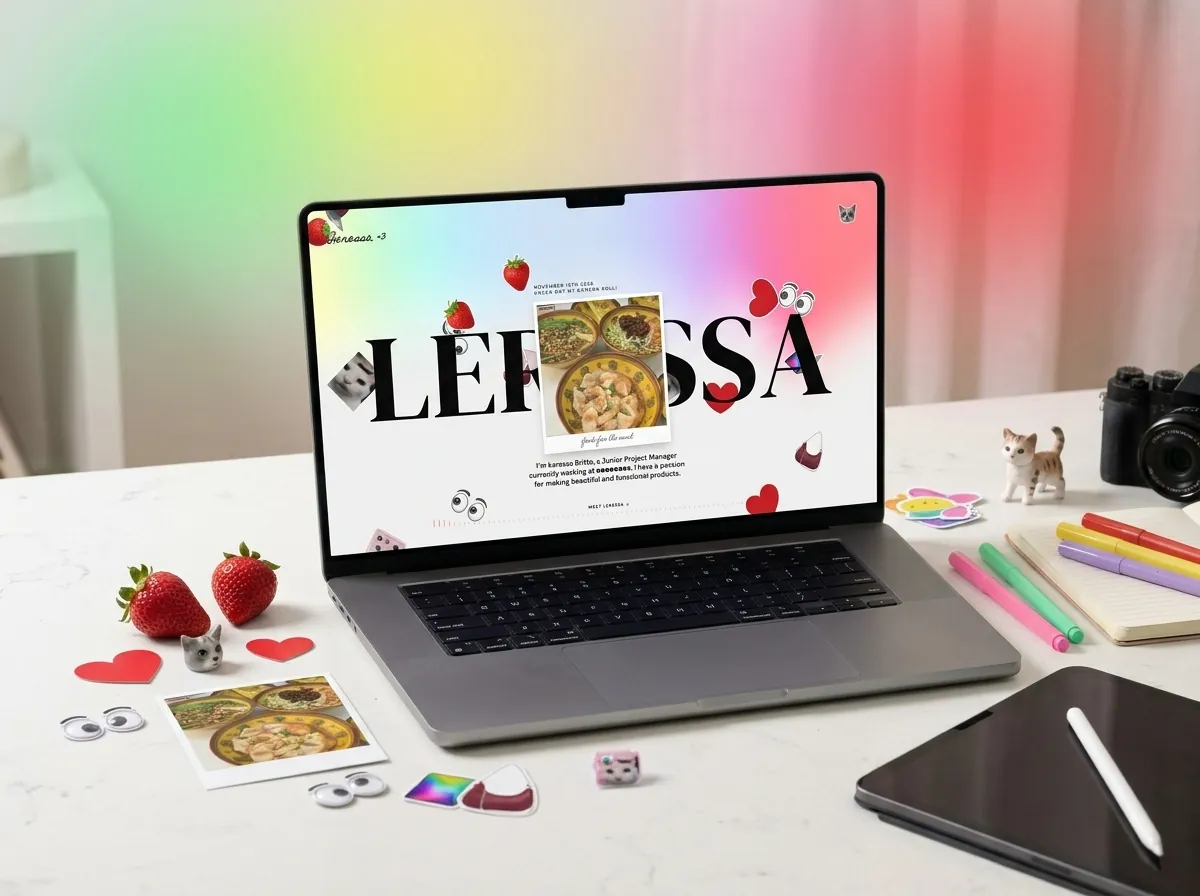
Designers' portfolios usually fail in the same way: the work is beautiful and the site is a slideshow. Leressa wanted the opposite — a portfolio where the structure itself demonstrated how she thinks, and where adding a new project took minutes rather than a rebuild.
We treated the site as a design system with a publishing interface attached. Type, spacing, colour and image ratios were fixed first; every case study then had to work inside those rules, which is the same discipline she applies to client work.
Approach
The layout is a strict editorial grid with a small number of allowed deviations. A project page can open wide for a hero, drop to a two-column spread for process, or go full-bleed for a campaign image — and nothing else. The constraint is what makes eight very different projects feel like one body of work.
- Tokens for type, spacing and rules, shared between the site and the CMS preview.
- Three project templates instead of a free-form page builder.
- Automatic image cropping so mixed aspect ratios still align on the grid.
- A writing mode: captions and body copy use the same measure as the rest of the site.
The build
Content lives in Sanity with a schema that mirrors the three templates, so the editor cannot produce a layout the design has not anticipated. The front end renders everything server-side, with view transitions between project pages that feel like turning a page rather than loading a new document.
The detail I am still pleased with is the caption system. Every image carries an optional label and credit, and the grid reserves space for both so a long caption never pushes the layout around. Small thing; it is the difference between a site that stays composed and one that slowly falls apart as content is added.
What shipped
The site publishes from Sanity through three fixed templates, with typography and spacing tokens shared between the CMS preview and the live front end, and a caption system that reserves space so long credits never push the grid around.